Articles —
How to build a personal forest practice from scratch
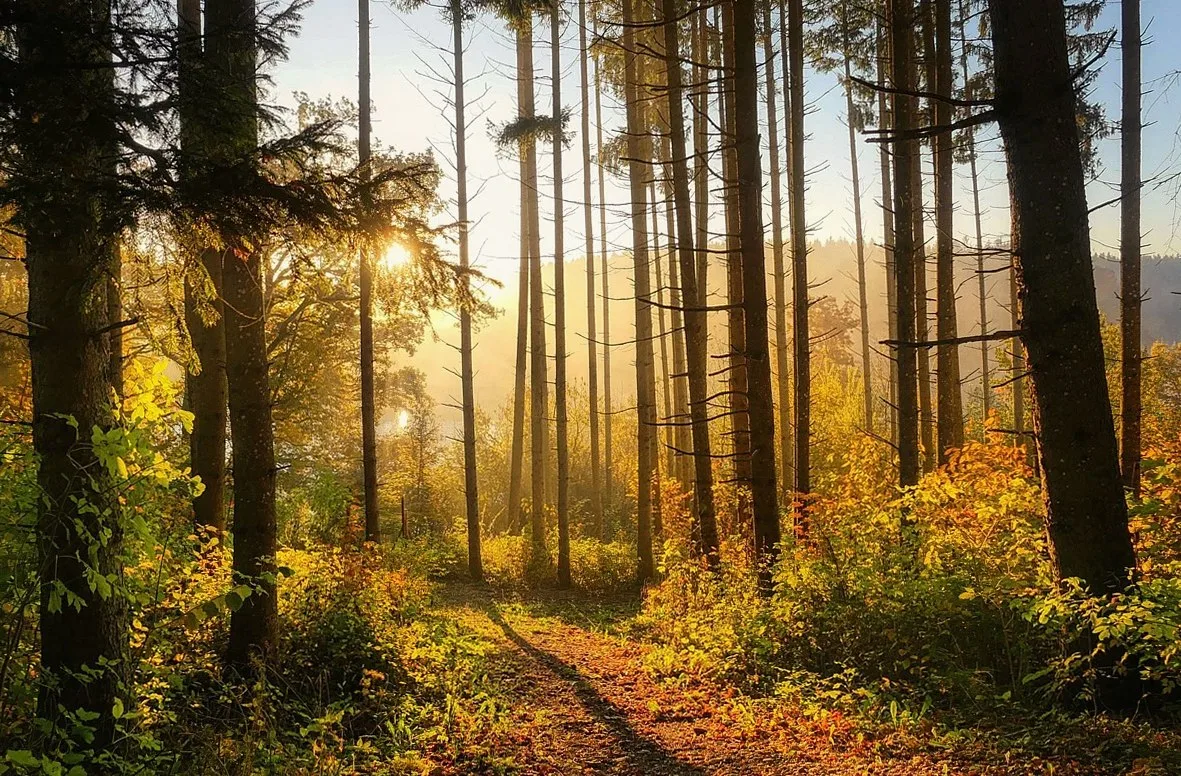
A practical framework for people who want more than an occasional walk in the woods
Most people who want to spend more time in nature have no shortage of good intentions. What they lack is a structure that makes the practice repeatable. A walk in the woods is pleasant. A practice is something you return to, something that accumulates, something that changes how you see the forest over time. The difference between the two is not motivation. It is design.
Start with one site, not many
The instinct when beginning a nature practice is to seek variety: different trails, different parks, different forests. This instinct is understandable but counterproductive in the early stages. The value of a forest practice comes largely from familiarity, from knowing a specific place well enough to notice when something has changed.
Choose one site within reasonable distance of your home and commit to it for at least three months. It does not need to be spectacular. A modest woodland park with a few acres of tree cover is sufficient. What matters is that you can get there regularly and that you know it well enough to notice the difference between last week and this week.
Set a time, not a duration
Most people approach nature time as something they will do when they have enough of it. This is why it rarely happens. A more reliable approach is to set a specific time of day and protect it, even if the duration is short.
For a twilight practice, the time sets itself: the hour around local sunset. This has the advantage of being ecologically meaningful, because the forest is doing something specific during that window, and it has the advantage of being finite. You know when it begins and roughly when it ends. A 45-minute twilight walk is more useful than a two-hour walk you keep postponing.
Keep a field record
The single most effective tool for deepening a forest practice is a field record of some kind. It does not need to be elaborate. A small notebook where you write the date, the time, the weather, and two or three observations from each visit is sufficient.
The value of the record is not the record itself. It is the act of looking for something worth writing down. That act of looking changes the quality of attention you bring to the forest. After a few months, the record also becomes a document of seasonal change at your specific site, which is one of the most interesting things a person can accumulate.
When to seek guidance
A self-directed practice is entirely viable, and many people sustain one for years without any external structure. But there are moments when guidance accelerates the practice significantly: when you are just starting and not sure what to pay attention to, when the practice has plateaued and feels repetitive, or when a life change has disrupted the routine and you need help rebuilding it.
The Indigo Forest Path programs are designed for these moments. The six-week shinrin-yoku module is particularly useful for people who are starting from scratch and want a structured introduction. The private consultation is useful for people who have been practicing for a while and want to think through where to go next.
A forest practice is not something you achieve. It is something you maintain, and the maintenance is the practice.
Miriam Okafor · Forest practice · Shinrin-yoku · Mindfulness · Nature wellness