Articles —
How twilight changes the shinrin-yoku practice
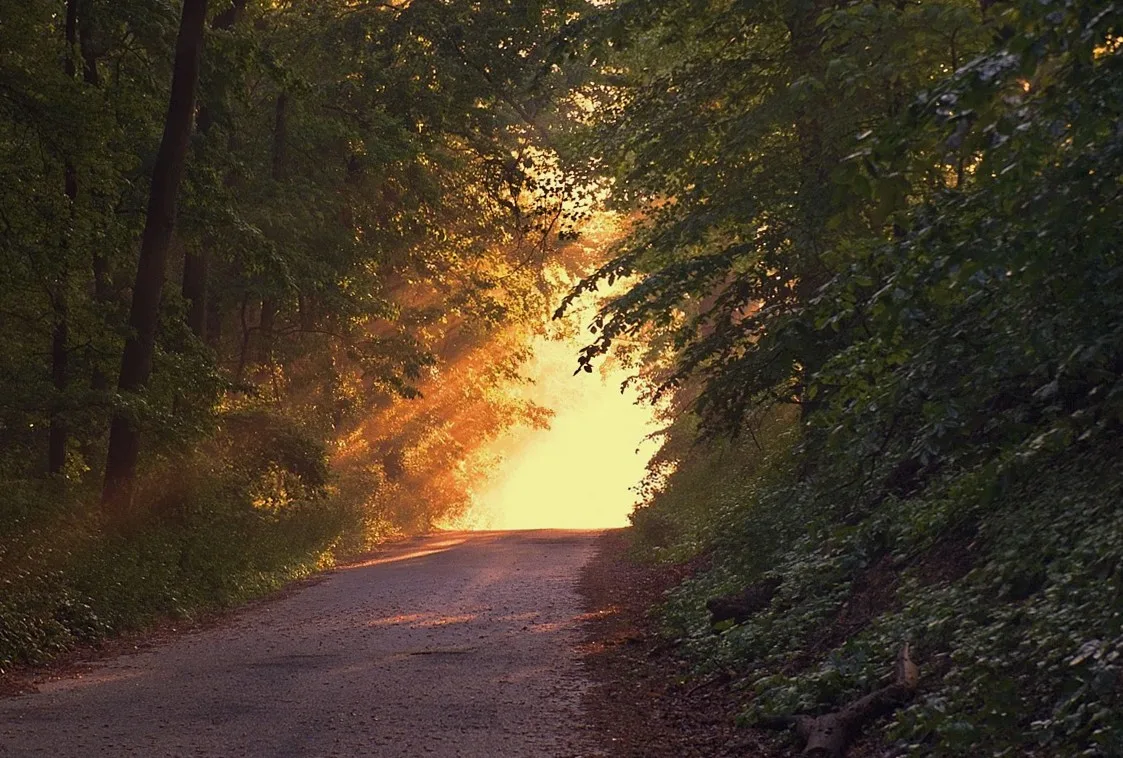
The hour before and after sunset is ecologically and neurologically distinct from midday forest time
Most writing about shinrin-yoku assumes a daytime forest. The research that established the physiological effects of forest bathing was conducted largely in the morning and early afternoon, in Japanese cedar and cypress plantations, with participants walking for two hours on marked trails. That research is solid. But it does not describe what happens when you enter a forest in the hour before sunset and stay until the stars appear.
What the forest is doing at dusk
In the late afternoon, the forest shifts its activity in ways that are audible and visible if you are moving slowly enough to notice. Diurnal birds begin their final foraging runs and then go quiet. Crepuscular species, the ones that are active specifically at dawn and dusk, begin to move. In temperate North American woodland, this means white-tailed deer, flying squirrels, and a range of moth species that are invisible during the day.
The light itself changes the forest's appearance more dramatically than any other variable. Low-angle light catches the undersides of leaves, illuminates spider webs that were invisible at noon, and creates a depth of shadow in the understory that makes the forest feel larger and more complex than it does in flat midday light. This is not a poetic observation. It is a function of the angle of incidence and the way the human visual system processes contrast.
The neurological case for evening practice
The transition from daylight to darkness triggers a measurable shift in the autonomic nervous system. As light levels drop, the body begins preparing for rest: cortisol levels decline, melatonin production begins, and the parasympathetic nervous system becomes more active. A twilight forest walk works with this transition rather than against it.
Daytime forest bathing research shows reductions in cortisol and improvements in parasympathetic activity after two-hour walks. A twilight walk of the same duration is likely to produce similar or stronger effects, because the body's own chemistry is moving in the same direction. The forest is not fighting your stress response. It is joining it on the way down.
Practical differences in the twilight practice
The most significant practical difference is pace. In daylight, it is possible to walk at a normal speed and still receive some of the benefits of forest immersion. At twilight, the reduced light naturally slows the pace, because the terrain requires more attention. This enforced slowness is one of the reasons the evening practice tends to feel more effective than a daytime walk of the same length.
The other practical difference is sensory emphasis. Daytime forest bathing is primarily visual. Twilight practice shifts emphasis toward sound and smell, because vision becomes less reliable as the light fades. The olfactory experience of a forest at dusk, particularly in autumn when leaf litter is decomposing, is substantially richer than at midday. Participants in the Indigo Forest Path group sessions consistently report that the smell of the forest is the detail they remember most clearly.
A note on safety and preparation
Evening forest walks require a small amount of preparation that daytime walks do not. A headlamp or small torch is essential for the walk back. Layers matter more, because temperatures drop quickly after sunset in most of North America's temperate zones. Telling someone where you are going and when you expect to return is basic practice.
None of this is complicated, and none of it diminishes the experience. The preparation is part of the ritual. Gathering what you need before a twilight walk is a form of attention that begins before you enter the forest.
The research on shinrin-yoku will continue to develop, and most of it will continue to focus on daytime practice. That is fine. The twilight forest does not need a clinical trial to justify itself. It has been there every evening, doing what it does, whether anyone was paying attention or not.
Miriam Okafor · Shinrin-yoku · Twilight · Forest bathing · Evening walks