Articles —
What is happening in Midwest woodland this autumn
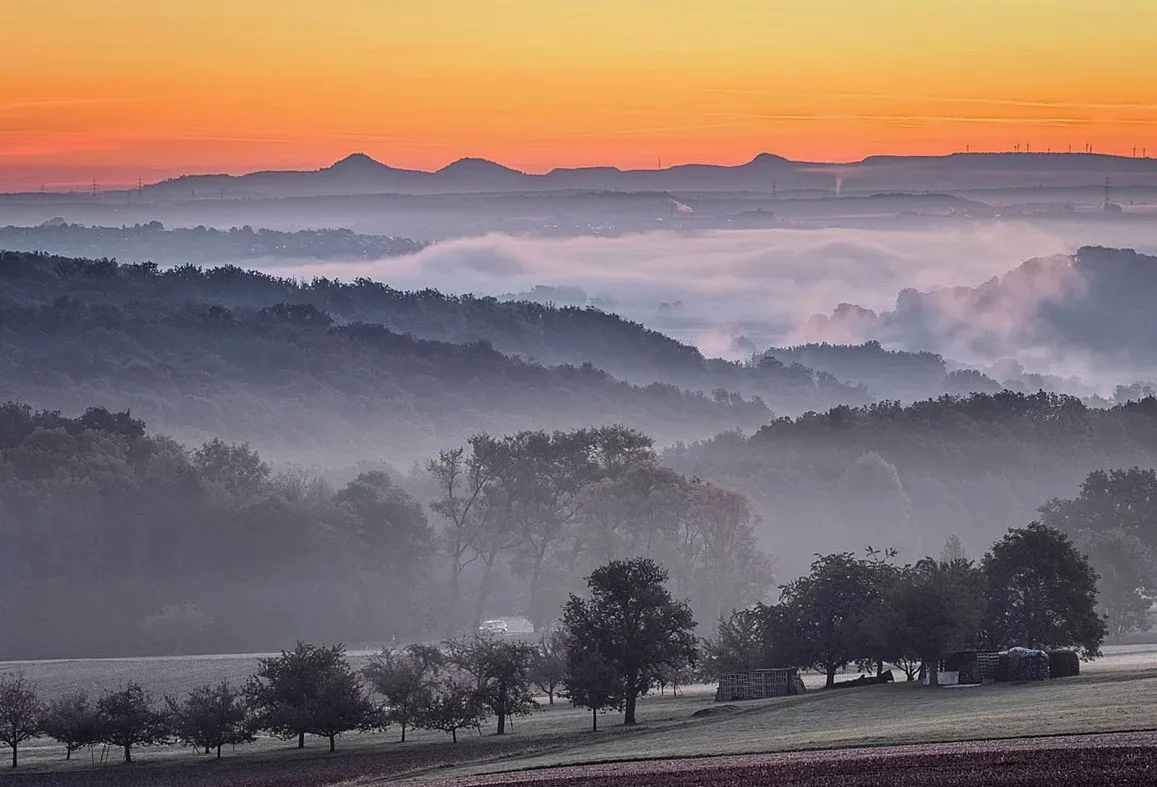
A field guide to the ecological transitions in Missouri and Kansas forests between October and December
Autumn in Midwest temperate woodland is not a single event. It is a sequence of overlapping transitions that begin in late August with the first goldenrod and continue through December when the last oak leaves finally release. Each transition has its own window, its own cast of species, and its own quality of light. Knowing what to look for changes what you see.
September and early October: the understory first
The canopy trees hold their leaves well into October, but the understory shrubs and herbaceous plants begin their autumn transition in September. Spicebush turns yellow before almost anything else. Pawpaw, which grows in the river bottomlands of Missouri, drops its fruit in mid-September and its leaves shortly after. These early changes are easy to miss if you are looking up at the canopy rather than at the layer between your knees and your shoulders.
This is also the peak of hawk migration along the Missouri River corridor. Broad-winged hawks move through in large numbers in mid-September, and sharp-shinned hawks follow through October. A twilight walk in early October will often end with the sight of a red-tailed hawk finding its roost for the night.
Mid-October to mid-November: the canopy transition
The sugar maples and red maples turn first, followed by the oaks, which hold their color longer and release their leaves later. In Missouri woodland, the peak of canopy color typically falls in the third week of October, though this varies by several weeks depending on the year's rainfall and the timing of the first hard frost.
The light during this window is the most dramatic of the year for a twilight forest walk. The low afternoon sun passes through colored leaves before reaching the forest floor, and the quality of that filtered light is unlike anything the forest produces in other seasons. Sessions in the Indigo Forest Path autumn program are timed to begin during this window whenever possible.
Late November and December: the bare forest
Once the leaves are down, the forest reveals its structure. Bird nests that were invisible all summer appear in the bare branches. The architecture of individual trees becomes legible in a way it is not when they are in full leaf. Sycamores, which retain their white upper bark, become the most visible trees in the winter woodland, visible from a distance that would have been impossible in August.
The fungi that fruit in late autumn, including oyster mushrooms on dead elm logs and various species of Ganoderma on oak stumps, are worth looking for specifically in November. They are easier to find after leaf fall, when the forest floor is visible rather than obscured by ground cover.
The Midwest woodland in autumn rewards the kind of attention that most people reserve for spring. The changes are just as dramatic. They are simply moving in a different direction.
Miriam Okafor · Autumn · Woodland ecology · Midwest · Missouri · Seasonal